



What Is the Petroleum Levy in Pakistan 2026-27?
The Rs 1,676 billion charge on fuel that the federal government keeps in full
By the ISN Media desk • June 2026 • Approx. 5-min read
This is a short, factual answer about the petroleum levy in Pakistan's 2026-27 budget. The figures are Budget Estimates from the Government of Pakistan, in billions of rupees. For the wider revenue picture, see how Pakistan raises its money.
What is the petroleum levy in Pakistan?
The petroleum levy is a charge the federal government applies to every litre of fuel sold, and it is projected to raise about Rs 1,676 billion in 2026-27, up about 14 percent on the year. Because it is classified as a levy rather than a tax, it is not shared with the provinces under the National Finance Commission formula, so the federal government keeps the whole of it. This makes it one of the most important sources of revenue the centre retains in full.
Why it matters
At about Rs 1,676 billion, the petroleum levy raises more than customs duty and is one of the largest single revenue lines. Its importance to the federal budget is heightened by the fact that it is not shared with the provinces, unlike most taxes. So while income tax and sales tax are larger, a big share of them passes to the provinces, whereas the petroleum levy stays entirely with the centre, which is under pressure to fund its own obligations from a limited retained pool.
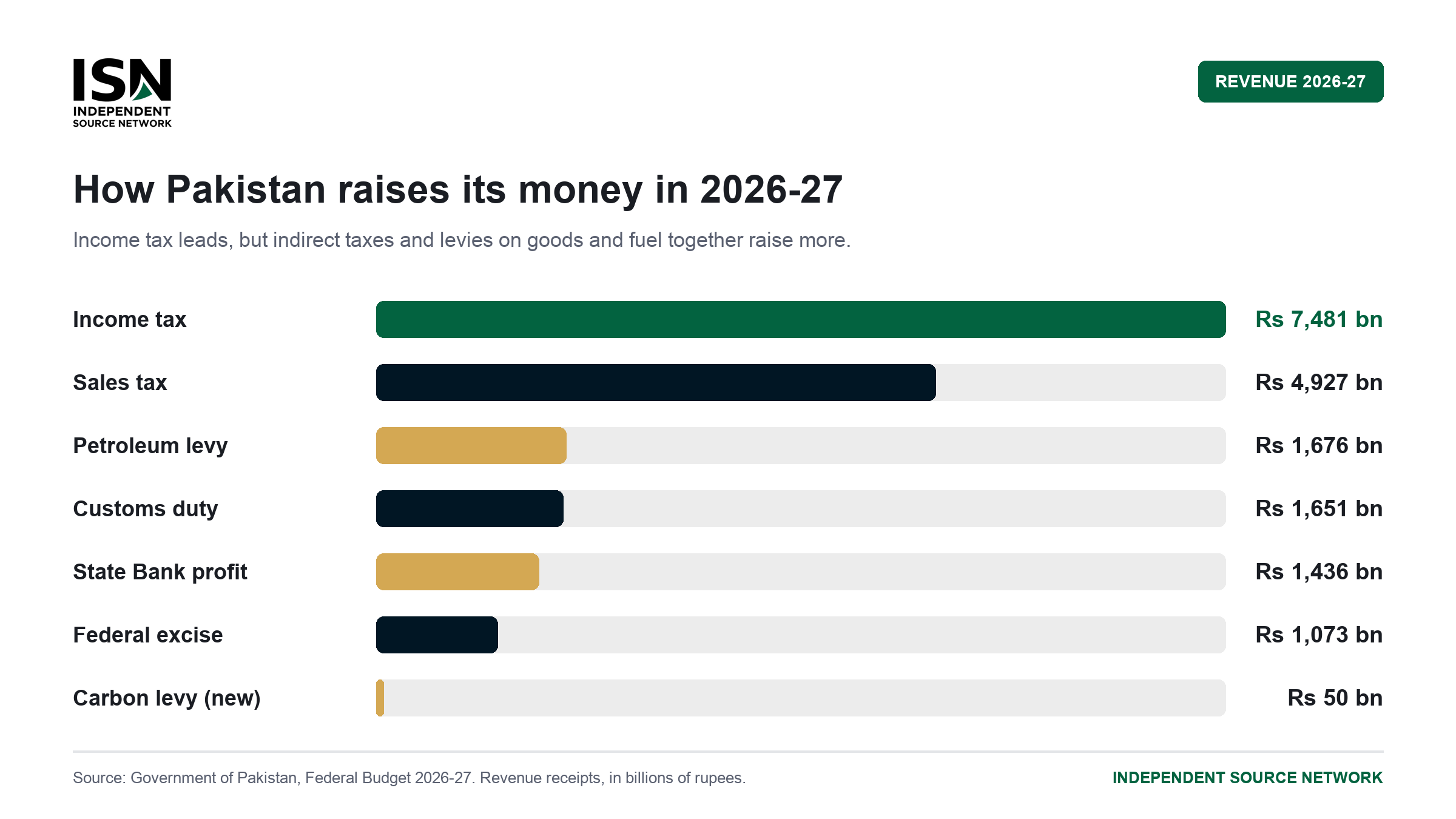
The petroleum levy, beside the other main sources of federal revenue.
Who pays it
The petroleum levy is an indirect charge, paid through the price of fuel. This means it is paid by everyone who buys petrol or diesel, regardless of income, and it also feeds into the cost of transport and goods more broadly, since fuel is an input to almost everything. As an indirect charge, it is part of what makes Pakistan's revenue system lean on consumption rather than income, a feature examined in direct vs indirect taxes in Pakistan.
Frequently asked questions
What is the petroleum levy in Pakistan? A charge the federal government applies to every litre of fuel, projected to raise about Rs 1,676 billion in 2026-27. It is classified as a levy rather than a tax, so the federal government keeps all of it.
How much does the petroleum levy raise? About Rs 1,676 billion in 2026-27, up about 14 percent on the year. That is more than customs duty raises.
Why is the petroleum levy not shared with the provinces? Because it is classified as a levy rather than a tax, it falls outside the National Finance Commission divisible pool, so the federal government retains the whole of it.
Who pays the petroleum levy? Everyone who buys fuel, since it is added to the price of petrol and diesel. It also raises the cost of transport and goods, because fuel is an input to almost everything.
Why does the government rely on the petroleum levy? Because it is a large, reliable source of revenue that the centre keeps in full, which matters when most other taxes are partly transferred to the provinces.
Has the petroleum levy increased this year? Yes, by about 14 percent, from roughly Rs 1,468 billion to Rs 1,676 billion, one of the steeper increases on the revenue side.
How does the petroleum levy compare with customs duty? The petroleum levy, at about Rs 1,676 billion, raises slightly more than customs duty, at about Rs 1,651 billion, and unlike customs it is not shared with the provinces.
Sources and notes
- Government of Pakistan, Federal Budget 2026-27: revenue figures are Budget Estimates in billions of rupees, rounded for readability.


 ISN MEDIA