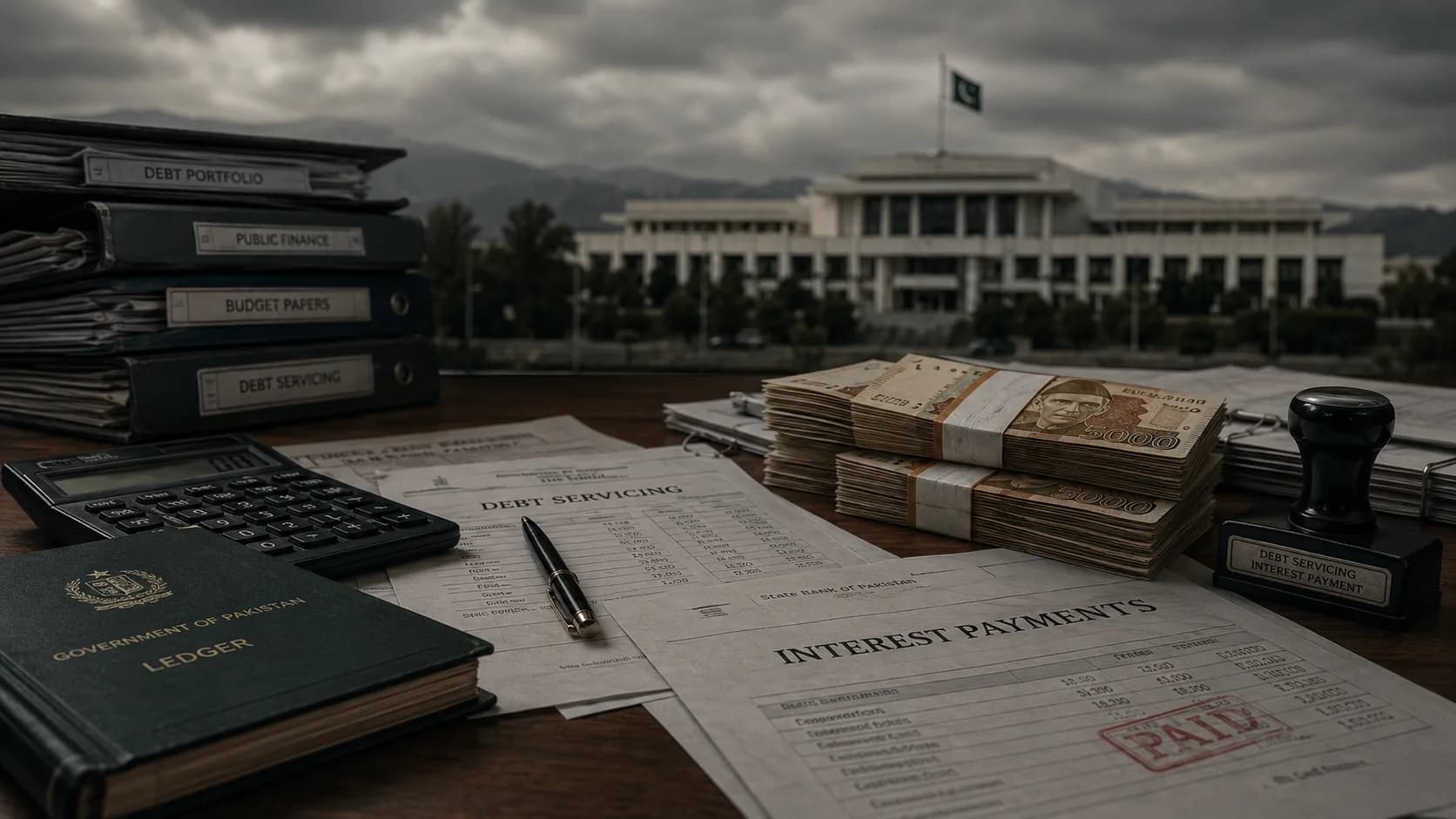
The provision that prohibits source-inquiry on foreign currency deposits and protects elite wealth flight
By Asad Baig · Lahore · May 2026 · Approx. 4-min read
The short answer
PERA Section 5 is the provision of Pakistan's Protection of Economic Reforms Act 1992 that grants three things to foreign currency account holders: complete immunity from source-of-funds inquiry, tax immunity covering income tax and wealth tax, and banking secrecy that overrides other Pakistani disclosure requirements. Combined with Section 111(4) of the Income Tax Ordinance (which grants tax immunity to inward remittances) and PERA Section 4 (free movement of foreign exchange) and PERA Section 9 (statutory protection from future government interference), Section 5 created the legal corridor through which Pakistani black money has been laundered for thirty-three years. The 1998 freeze violated PERA Section 9's protection clause, but Section 5's source-inquiry prohibition has remained intact and operational.
This is a Tier 3 long-tail spoke under the 1992 Protection of Economic Reforms Act: PERA explained.
What Section 5 prohibits
Pera Section 5 Provisions
Source-of-funds inquiry | PROHIBITED |
|---|---|
Tax inquiries (income, wealth) | PROHIBITED |
Banking secrecy violation | PROHIBITED |
FBR investigation | BLOCKED |
The provision means that any foreign currency held in a PERA-protected account cannot be investigated for its origin. The State Bank, banks, the Federal Board of Revenue, and other Pakistani institutions are statutorily prevented from inquiring into the source. The combination with the AMLA's source verification requirement is what produces the AML-PERA contradiction.
Frequently asked questions
What is PERA Section 5? A provision of Pakistan's Protection of Economic Reforms Act 1992 that grants complete immunity from source-of-funds inquiry on foreign currency deposits, plus tax immunity and banking secrecy.
Was PERA Section 5 repealed during the FATF grey list period? No. Section 5 survived the 2018-2022 FATF grey list period substantially intact. The reforms that hurt small users were implemented thoroughly while Section 5 and Section 111(4) tax immunity remained operational.
Does Section 5 apply to all FCY accounts in Pakistan? Section 5 applies to FCY accounts under the PERA framework. The 2020 SRO partially closed the rupee-to-dollar conversion pipeline at the deposit point but Section 5 source-inquiry prohibition remained intact for existing PERA-era account structures.
How would the Productive Capital Account address PERA Section 5? PERA Section 5 would be repealed for PCA purposes. The PCA framework requires mandatory source verification on every deposit, exceeding both current PERA practice and FATF requirements.
Why is PERA Section 5 still in force in 2026? Because the political constituency that benefits from it (the 200,000 organised beneficiaries of the elite extraction architecture) has political power that the constituency for reform has not yet matched. The provision serves elite interests and is preserved through the Pakistani political process.
How does PERA Section 5 connect to the 1998 freeze? PERA Section 5's source-inquiry prohibition allowed the round-trip mechanism that produced the $11 billion accumulation in PERA-era FCY accounts. When the framework collapsed in May 1998, account holders who had relied on PERA's protection (including PERA Section 9's anti-interference clause) were forced to convert at Rs 46/USD below market. Section 9 was violated. Section 5 remained operational.
Sources
Protection of Economic Reforms Act 1992, Sections 4, 5, and 9
2018 academic legal analysis of the AMLA-PERA contradiction
Anti-Money Laundering Act 2010
Position Paper: The Foreign Currency Account Problem in Pakistan, May 2026



 ISN MEDIA