Why Pakistan Should Ban Dog Culling and Switch to Humane Population Control
In short: Pakistan kills an estimated 50,000 stray dogs every year by poisoning and shooting them, even though its own courts have ruled the practice illegal and its own policy framework already mandates a humane alternative. Mass culling is cruel, it violates Pakistani law, and — critically — it does not work. Decades of killing have not reduced the stray population or rabies deaths. The proven, internationally endorsed solution is Catch–Neuter–Vaccinate–Return (CNVR/TNVR), which has controlled stray populations and eliminated rabies in countries from Turkey to Bhutan to the Netherlands. This article lays out the evidence, the law, the cruelty, and the practical road map for reform.
The scale of the problem
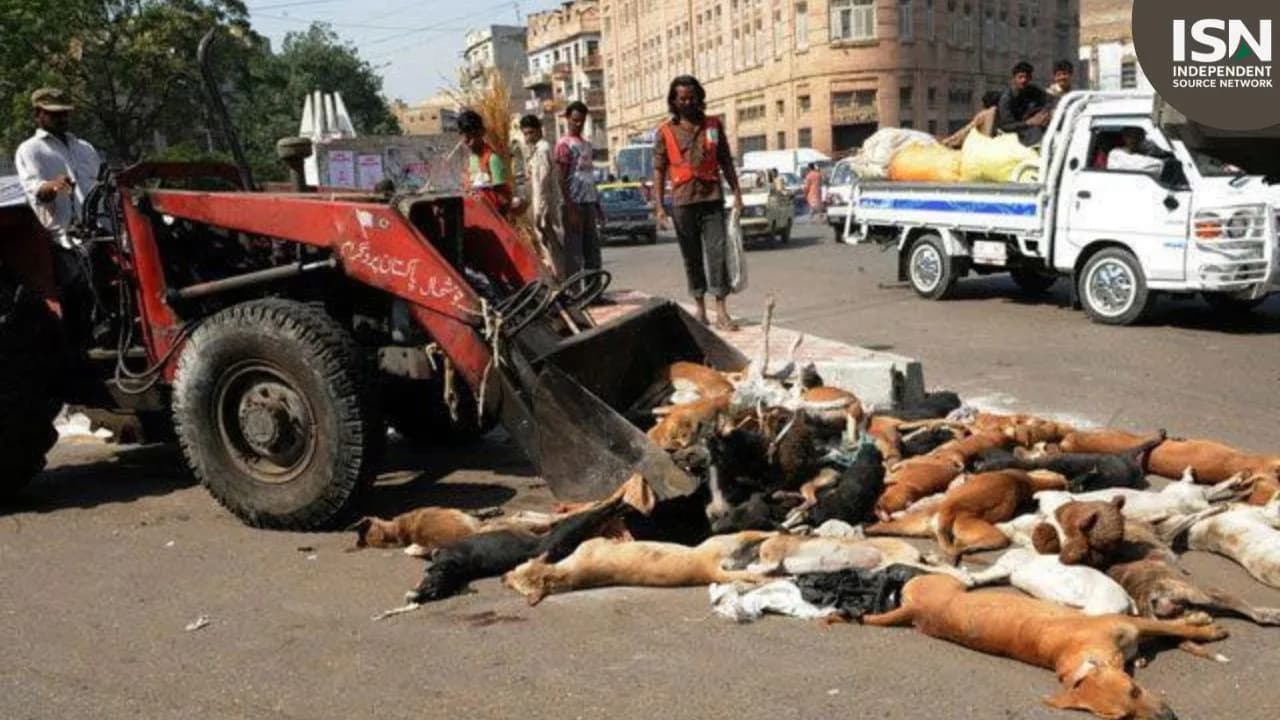
Estimates commonly cited put Pakistan's free-roaming dog population at around 3 million, though there is no verified government census to confirm this figure — a data gap that itself hampers good policy. Against that backdrop, animal-protection groups estimate that roughly 50,000 stray dogs are killed each year through poisoning and shooting, much of it carried out on official municipal orders. Karachi and Lahore consistently record the highest culling rates.
The public-health pressure that authorities point to is real and should not be dismissed. Health officials estimate that around one million people are bitten by dogs in Pakistan annually, and the country reports somewhere in the range of 5,000 to 6,000 rabies-related deaths a year — among the highest rabies burdens in the world. In Punjab alone, reported dog-bite cases exceeded 500,000 between 2024 and March 2026, and the province's health department has documented more than 1.3 million bite incidents. In a single week of February 2026, the National Institute of Health recorded more than 5,600 bite cases nationwide, following an even higher weekly figure the previous month. Chronic shortages of anti-rabies vaccine and rabies immunoglobulin make each bite more dangerous than it should be.
So the fear driving culling campaigns is not imaginary. The question this article confronts is whether killing dogs actually reduces that danger — or whether it makes the underlying problem worse while inflicting enormous cruelty. The evidence points firmly to the latter.
How dogs are killed in Pakistan: the documented cruelty
The methods used are, by any standard, brutal. The two dominant techniques are:
Poisoning: Frequently with strychnine, which causes violent convulsions and a slow, agonising death. Poisoned bait is scattered in neighbourhoods indiscriminately.
Shooting: Often carried out by armed municipal teams moving through residential streets, sometimes in daylight where residents and children witness animals bleeding to death.
The cruelty is compounded by its indiscriminate nature. Culling teams do not distinguish between aggressive and harmless animals, or between healthy dogs and nursing mothers. Animal-welfare workers have documented cases such as fifteen orphaned puppies brought to a Rawalpindi sanctuary after their mothers were poisoned. Sterilised and vaccinated dogs released by private welfare organisations have themselves been poisoned by municipal crews, undoing the very programmes that offer a real solution.
The harm radiates outward. Poison scattered in public spaces contaminates soil and water, kills non-target wildlife, and poses a risk to owned pets and even children. And there is a societal cost that is harder to measure: when killing is normalised and children grow up watching animals shot in the street, cruelty is taught rather than prevented. Pakistan's own courts have flagged this. The country ranks in the lowest band — grade "E" — on the World Animal Protection Index, with especially poor marks for government accountability and animal protection, placing it among the worst performers globally.
Why culling doesn't work: the "vacuum effect"
The single most important argument against culling is not emotional — it is practical. Killing dogs does not reduce their numbers over the long term. This is well established in veterinary and public-health science, and it is driven by what specialists call the vacuum effect.
Free-roaming dogs are territorial. A settled pack in a neighbourhood knows where food and shelter are, maintains a stable hierarchy, and — crucially — defends its territory against outside dogs. When a culling operation removes that resident pack, it does not eliminate the territory; it empties it. That vacant territory, with its reliable food sources, is quickly filled by new dogs migrating in from surrounding areas.
The replacements are almost always worse from a public-safety standpoint. They are typically younger, more desperate, unvaccinated, and unfamiliar with local human routines — making them more prone to fear-based aggression and more likely to carry rabies than the vaccinated, socialised animals that were killed. And because culling removes the territorial competition that naturally limits breeding, the surviving and incoming dogs reproduce faster. A single female dog can produce more than a dozen puppies a year and dozens over her lifetime. The result is a population that rebounds — often to the same or higher levels — within a season or two.
As one Pakistani advocate put it bluntly: if seven decades of culling campaigns had worked, the stray population would already be under control. It is not. The cycle of panic, killing, rebound, and renewed panic is the defining pattern of Pakistan's approach — and it is a treadmill, not a solution.
What Pakistani law actually says
Here is the part many people do not realise: mass culling is already unlawful in Pakistan. The legal architecture opposing it is more developed than public debate suggests.
The statutory framework
The Prevention of Cruelty to Animals Act, 1890 remains Pakistan's foundational animal-welfare law. Its anti-cruelty provisions (sections 3–5) make cruelty punishable by fine and imprisonment. The Act is colonial-era and badly outdated — it recognises that animals feel pain but stops short of modern sentience protections — yet it still prohibits the kind of gratuitous suffering that poisoning and street-shooting cause.
The Pakistan Penal Code (Section 429) criminalises killing or maiming animals above a token value.
The Punjab Animal Birth Control Policy, 2021 was written specifically to move the province away from culling and toward humane, scientific, legally regulated population control. It permits euthanasia only for terminally ill or severely injured dogs, under veterinary supervision, using a painless drug such as sodium pentothal — and mandates sterilisation, vaccination, tagging, and release for healthy dogs, plus shelter homes in every tehsil.
The landmark court rulings
Pakistani courts have repeatedly and explicitly restricted culling:
Islamabad Wildlife Management Board v. Metropolitan Corporation Islamabad (PLD 2021 Islamabad 6) — The Islamabad High Court held that life is sacred and not confined to human beings, recognised animals as sentient beings with intrinsic worth, and linked animal welfare directly to the constitutional right to life under Article 9.
Anila Umair v. Federation of Punjab (W.P. 3787/2024) — The Lahore High Court ruled that only incurably ill or mortally wounded dogs, as diagnosed by a qualified veterinarian, may be euthanised, and only through humane procedures. Blanket culling that fails to distinguish harmless from aggressive animals is impermissible.
Eiraj Hassan & Others v. Government of Punjab (W.P. 17741/2025) — The court found local authorities were still mass-killing dogs, including healthy ones and often without veterinary supervision, in direct violation of the Animal Birth Control Policy. It confirmed that poisoning and shooting as broad population-control methods are unlawful, and that healthy dogs must be sterilised and vaccinated, not killed. Binding provincial directives followed in April 2025.
The Islamabad High Court has issued an explicit ban on culling in the capital territory.
In other words: the constitution, the statutes, the provincial policy, and repeated High Court judgments all point the same way. The ban the public is asking for largely exists on paper already.
Why the killing continues anyway
If culling is illegal, why does it persist? The gap is one of enforcement and politics, not law.
Courts have had to intervene again and again. In January 2026 the Rawalpindi Bench of the Lahore High Court issued a fresh stay order after new reports of municipal killings. In April 2026, after continued allegations of unlawful operations — including reported shooting in Lahore's Johar Town — the court demanded written undertakings from Punjab authorities to implement the Animal Birth Control Policy "in letter and spirit," and warned that further violations could trigger contempt proceedings. That a court must repeatedly re-issue the same order is itself evidence of systematic non-compliance.
Several forces sustain the status quo:
Culling looks decisive. Dogs vanish from the street quickly, public panic subsides temporarily, and officials appear to be "doing something" — even though the effect is short-lived.
Humane methods are slower and less visible. CNVR shows results over years, not days, which is politically less attractive.
Public understanding is thin. Most residents have never heard of TNVR, so eliminating dogs after a single bite incident "sounds good" to constituents.
Institutional capacity is weak. The departments responsible are chronically underfunded and understaffed; there is no national animal-welfare authority, no centralised bite-reporting helpline, and the SPCA and animal-rescue infrastructure are threadbare.
Fear normalises extremes. Once panic sets in, scrutiny weakens and cruelty becomes easy to justify — dogs stop being seen as animals to manage and become problems to eliminate.
The humane alternative: CNVR / TNVR explained
The globally endorsed solution goes by several near-identical names — CNVR (Catch–Neuter–Vaccinate–Return), TNVR (Trap–Neuter–Vaccinate–Return), or Animal Birth Control (ABC). The mechanics are straightforward:
Catch free-roaming dogs humanely, neighbourhood by neighbourhood.
Neuter (sterilise) them so they cannot breed.
Vaccinate them against rabies.
Tag them (often with an ear notch or marker) so they are identifiable as processed.
Return them to the exact location they came from.
The logic is the reverse of the vacuum effect. Because the dogs are returned to their own territory, they keep defending it — but they can no longer reproduce, so the population steadily shrinks through natural attrition instead of exploding. Because they are vaccinated, they form an immune barrier that stops rabies transmission at the source. And because the same familiar, socialised dogs remain in place, aggression tends to fall rather than rise.
Both the World Health Organization (WHO) and the World Organisation for Animal Health (WOAH/OIE) recommend this approach and explicitly discourage culling, which the WHO Expert Committee on Rabies describes as costly and ineffective at reducing rabies. The key technical benchmark is coverage: to break the breeding and rabies-transmission cycle, roughly 70% of the dog population must be sterilised and vaccinated. Below that threshold, results stall — which is why half-hearted or intermittent programmes fail and give the false impression that "humane methods don't work either."
Global proof that it works
This is not a theory awaiting its first test. Countries with economic and social conditions comparable to — or poorer than — Pakistan's have made it work:
Turkey pioneered a "Never Kill" strategy, running comprehensive trap-neuter-vaccinate-return programmes, ear-tagging sterilised dogs, and working with community feeders. Over roughly a decade its stray population stabilised, rabies was nearly eliminated, and human–dog coexistence held.
The Netherlands became effectively "stray-dog-free" through CNVR combined with adoption promotion and responsible-ownership laws.
Greater Bangkok, Thailand conducted nearly 300,000 CNVR operations over five years and independently measured the results: a 24.7% drop in free-roaming dog density, a steady month-on-month decline in dog rabies cases, and a marked improvement in dog–human relations.
Bhutan sterilised and vaccinated more than 70% of its free-roaming dogs through a national CNVR programme, with the government reporting strong outcomes.
Bangladesh drove down rabies through a vaccination-led national programme, and Sri Lanka and Indonesia have documented population and nuisance reductions through CNVR.
India, facing a vastly larger stray population, operates Animal Birth Control under a dedicated Animal Welfare Board and a regularly updated 1960 cruelty statute.
The common thread: sustained, well-funded, high-coverage sterilisation and vaccination reduces populations and rabies, while culling does neither. Pakistan itself has proof of concept — Islamabad's CDRS Benji Project launched the country's first dedicated TNVR sanctuary, demonstrating the model is viable on Pakistani soil.
Addressing the public-safety counterargument honestly
A responsible case for reform must take the fear seriously rather than dismiss it. Residents who reroute their walk home, carry a stick, or panic at barking after being bitten are not villains — they are people whose safety the state has failed to protect. Any humane policy that ignores them will lose public support and, ultimately, fail.
But the honest answer is that CNVR protects people better than culling does, on every metric residents actually care about:
Rabies: Vaccinating 70% of dogs creates herd immunity that culling can never achieve, because culling leaves survivors and draws in unvaccinated newcomers. Rabies is a vaccine-preventable disease; you cannot shoot your way out of it.
Bites and aggression: Stable, sterilised, well-fed territorial packs are less aggressive than the desperate, unfamiliar dogs that flood in after a cull. Sterilisation also reduces roaming, fighting, and mating-driven aggression.
Population: Only sterilisation actually reduces numbers over time. Culling produces a temporary dip followed by a rebound.
Crucially, humane management is not "let the dogs be." It pairs CNVR with rabies-vaccine and immunoglobulin availability at hospitals, prompt euthanasia (by a vet) of genuinely dangerous or terminally suffering animals, municipal waste management so dogs have less to scavenge, and public education on bite prevention. Public safety and animal welfare are not opposing goals here — the same policy delivers both.
The ethical and religious dimension
The case against culling is also moral, and in Pakistan it is grounded in faith. Islamic teaching is explicit that cruelty to animals is forbidden and that animals must not be caused unnecessary suffering; the Prophet Muhammad (peace be upon him) repeatedly emphasised mercy toward animals. Mass poisoning and street-shooting sit in direct tension with those teachings. Pakistan's own High Courts have echoed this ethical vision, holding that the sanctity of life is not confined to human beings and that a state which normalises cruelty and ignores court orders wounds its own rule of law.
What effective humane management costs — and why it's affordable
Cost is the objection officials reach for most often, and it does not survive scrutiny. Veterinarians in Pakistan have estimated that vaccinating and sterilising the ~70% of the national stray population needed to break the cycle would cost on the order of 3 to 4 billion rupees. That is less than what the country already spends importing human anti-rabies vaccines each year — vaccines it needs precisely because rabies remains uncontrolled. In other words, Pakistan is already paying the price of the problem; humane management simply redirects that money toward actually solving it, rather than funding an endless, ineffective killing cycle.
A practical road map for reform
Turning the existing legal position into reality requires a concrete plan:
Enforce the ban that already exists. Treat continued culling as the contempt of court and violation of policy that it is, with accountability for officials who order poisoning or shooting.
Fund and scale CNVR to 70% coverage, city by city, with trained teams, vehicles, veterinary staff, and proper record-keeping — the coverage threshold is non-negotiable for success.
Build shelter and clinic infrastructure, including the tehsil-level shelter homes the 2021 policy already envisions, run in partnership with credible welfare NGOs.
Guarantee rabies-vaccine and immunoglobulin supply at hospitals nationwide, and stand up a centralised bite-reporting and response helpline.
Manage the food supply. Systematic urban waste management removes the scavenging that sustains large stray populations.
Modernise the law. Replace or overhaul the 1890 Prevention of Cruelty to Animals Act with legislation that recognises sentience, imposes real penalties, and creates a national animal-welfare authority; join the Universal Declaration on Animal Welfare (UDAW).
Educate the public on TNVR, bite prevention, and responsible pet ownership, and promote adoption and registration to reduce abandonment — the main source that refills stray populations even where CNVR is working.
Learn from those who have done it. Draw directly on Turkey, Bhutan, Thailand, and the ICAM coalition's dog-management methodology rather than improvising.
Frequently asked questions
Is dog culling legal in Pakistan? No — not as a general population-control tool. Multiple High Court rulings and the Punjab Animal Birth Control Policy 2021 restrict killing to veterinarian-supervised euthanasia of terminally ill or mortally injured dogs. Mass poisoning and shooting of healthy strays has been repeatedly found unlawful, yet it continues due to weak enforcement.
Does killing stray dogs reduce their population? No. The "vacuum effect" means culled territory is quickly repopulated by new, often unvaccinated and more aggressive dogs that then breed faster without competition. Decades of culling in Pakistan have not reduced stray numbers or rabies deaths.
What is the humane alternative? Catch–Neuter–Vaccinate–Return (CNVR/TNVR), recommended by the WHO and WOAH. Dogs are sterilised, vaccinated against rabies, tagged, and returned to their territory. Populations shrink through attrition and rabies is stopped at the source.
Won't humane methods leave people unsafe from rabies and bites? The opposite. Vaccinating ~70% of dogs creates herd immunity that culling cannot, and stable sterilised packs are less aggressive than the newcomers that replace culled dogs. Effective programmes also pair CNVR with hospital vaccine supply, waste management, and removal of genuinely dangerous animals by vets.
Which countries prove it works? Turkey, the Netherlands, Bhutan, Thailand (Bangkok), Bangladesh, Sri Lanka, and Indonesia have all reduced stray populations and/or rabies through humane management. Pakistan's own Islamabad-based CDRS Benji Project shows the model works locally.
Can Pakistan afford it? Yes. Estimates put the cost of sterilising and vaccinating 70% of the population at around 3–4 billion rupees — less than Pakistan already spends annually importing human rabies vaccines to treat a problem culling never solves.
Conclusion
Pakistan does not face a choice between protecting people and protecting animals — that framing is the myth that keeps the killing going. Mass culling is cruel, unlawful under Pakistan's own constitution, statutes, and court rulings, and demonstrably ineffective at reducing either the stray population or rabies. The humane alternative is not a soft compromise; it is the approach the WHO, WOAH, Pakistani courts, and a decade of international evidence all identify as the one that actually works. The ban already exists in law. What remains is the political will to enforce it, fund the alternative properly, and stop paying — in money, in suffering, and in public safety — for a killing cycle that has failed for seventy years.


 Mohsin Rana