By the ISN Media Desk
June 2026
Approx. 8-min read
A child standing at a traffic signal is visible to everyone, yet often noticed by no one. He may be cleaning car windows, collecting garbage before sunrise, serving tea at a roadside hotel, carrying bags in a busy market, sleeping near a bus station, or begging outside a shrine. For many people, he becomes part of the daily background of Pakistani urban life. For predators, however, that same child can become an easy target.
This is the harsh reality behind the issue commonly known as Bacha Bazi.
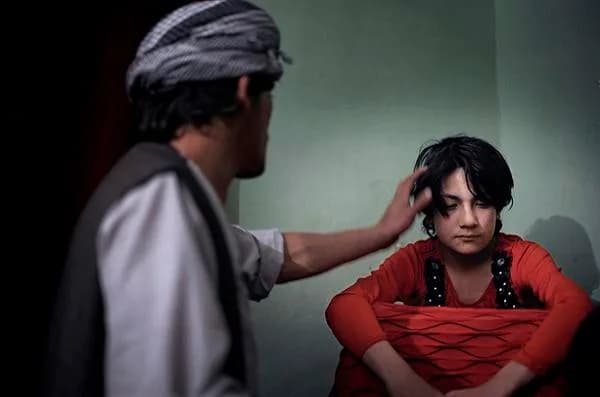
The term is often used to describe the sexual exploitation of vulnerable boys by older men who hold power over them through money, shelter, employment, protection, influence, fear or dependency. Sometimes this abuse is hidden behind words like care, mentorship, patronage, employment, protection or tradition. But no softer label can change the truth: a child is being exploited by an adult who has power over him.
Bacha Bazi is not only a story of individual criminals. It is also a story of a system that repeatedly fails children who are already vulnerable. Poverty pushes children into unsafe spaces. Child labour keeps them away from schools and adult supervision. Families fear social shame. Communities stay silent. Police and courts often move slowly. Shelters, counselling and rehabilitation services remain limited.
The result is a dangerous cycle where abuse survives because too many people know enough to be disturbed, but not enough people act.
What is Bacha Bazi?
Bacha Bazi refers to the sexual exploitation of boys, usually by older men. In Pakistan, research by ECPAT International and PAHCHAAN has documented the vulnerability of boys to sexual exploitation and has referred to practices where boys are kept by wealthy men under the appearance of education, care or protection, but are sexually exploited. Similar practices have also been reported in Afghanistan. [2]
The language used around this issue matters. When exploitation is described as “culture,” “tradition” or “protection,” the crime becomes easier to hide. But a child cannot consent to exploitation. Not for food. Not for shelter. Not for a job. Not because he is poor. Not because the abuser claims to protect him.
The simplest and clearest definition is this: Bacha Bazi is child sexual exploitation disguised by power, poverty, dependency and silence.
Child Sexual Abuse in Pakistan: What the Data Shows
Pakistan’s official child protection data shows that the crisis is far larger than isolated news headlines suggest.
According to the National Commission on the Rights of Child’s State of Children in Pakistan 2025 report, police records from Islamabad, Balochistan, Khyber Pakhtunkhwa, Punjab and Sindh recorded 17,348 sexual crimes against children between 1 January and 31 December 2025. Punjab recorded 12,800 of these offences, Sindh 3,187, Khyber Pakhtunkhwa 855, Islamabad 431, and Balochistan 75. [1]
These figures need careful reading. Higher numbers in Punjab may reflect its larger population and possibly better FIR registration. Lower numbers in some regions do not automatically mean fewer victims. They may also reflect underreporting, social pressure, weaker access to police, stigma or limited institutional reach. In other words, fewer reported cases do not always mean fewer crimes. [1]
The age breakdown is equally alarming. Children aged 16 to 17 made up 56% of registered cases, while children aged 11 to 15 made up 30%. Together, children between 11 and 17 accounted for 86% of reported cases. Younger children were also not spared. Children aged 0 to 10 accounted for 2,378 cases, or around 13% of the total. [1]
Gender-wise, official data shows that 65% of reported offences involved girls, 35% involved boys, and three cases involved transgender children. This confirms two realities at the same time: girls remain at extremely high risk, but boys also make up a major share of victims and are often missing from public conversation. [1]
Why Boys Are Often Invisible Victims
One of the most harmful myths in society is that boys are naturally safe because they are “strong.” This belief does not protect boys. It silences them.
ECPAT’s Pakistan research found that gender norms around masculinity make boys less likely to be recognised as victims and less likely to seek help. Many people wrongly assume boys can protect themselves, that they are less affected by abuse, or that what happened to them is not serious. These ideas are false, harmful and dangerous. [2]
The same research found that stigma and shame are major barriers to disclosure. Support workers identified several reasons why boys stay silent: fear of being blamed, fear of being mocked, taboos around sex and sexuality, fear of being harmed by the perpetrator, lack of visible services for boys and fear that no one will believe them. [2]
This is why the phrase “silence protects abusers” is not just emotional language. It describes how exploitation continues. When families fear dishonour more than they fear the criminal, the child is left alone. When communities treat abuse as a private shame instead of a public crime, the abuser wins. When boys are told they cannot be victims, they learn to suffer quietly.
Poverty and Child Labour Create Dangerous Vulnerability
Predators do not always begin with violence. Many begin with help.
A meal. A few hundred rupees. A place to sleep. A job at a shop. A mobile phone. A ride home. A promise of protection.
For a child trying to survive, these offers can feel like rescue. For an abuser, they can become tools of control.
Pakistan’s child labour figures show how wide the vulnerability is. NCRC’s 2025 report estimates that 8.61 million children aged 5 to 17 are engaged in child labour across the four provinces and Islamabad. Punjab alone accounts for around 6.04 million, Sindh 1.61 million, Khyber Pakhtunkhwa 745,155, Balochistan 201,352, and Islamabad 15,180. Boys have consistently higher child labour prevalence than girls across provinces. [3]
Child labour places children in exactly the spaces where exploitation can happen: streets, workshops, markets, transport hubs, hotels, restaurants, auto repair shops, garbage collection points, domestic work, agriculture, brick kilns and informal labour networks.
The U.S. Department of Labor’s 2024 findings on the worst forms of child labour in Pakistan state that children are subjected to commercial sexual exploitation, forced domestic work, forced begging, brick manufacturing, agriculture and other hazardous sectors. The report also notes that some children are kidnapped or sold into organised begging rings, domestic servitude, gangs and sex trafficking. [4]
Poverty does not cause abuse. Abusers cause abuse. But poverty creates the openings that abusers exploit. When a child has no safe home, no school, no income support, no trusted adult, no documents, no shelter and no easy access to justice, a predator does not need to break down a wall. Society has already left the door open.
Street Children Are Not Always Orphans
A common misconception is that children living or working on the street are mostly orphans. Available evidence suggests a more complicated reality.
NCRC’s 2025 report cites a 2022 Islamabad study by the Wafaqi Mohtasib which found that 91% of surveyed street-connected children were living with families. Boys made up 65% of respondents, with an average age of 12 years. Most were engaged in informal work or street-based activities with limited access to education and basic services. [3]
This changes how Pakistan should understand the issue. Many children are not on the street because they have no family at all. Many are there because their family is too poor, too pressured, too unsafe, too broken or too unsupported to protect them. Some are pushed into earning. Some run away from violence. Some are pulled into organised begging or informal labour. Some move between home, work and street without being fully protected anywhere.
This means the solution cannot only be rescue. It must also include family support, school reintegration, safe shelters, counselling, income support and long-term case management.
Abuse Does Not Only Happen on the Streets
The public often imagines danger as something that exists outside the home, in dark streets or unknown places. But child sexual violence often happens in trusted spaces.
NCRC’s analysis of Sahil’s 2024 data noted that child sexual violence occurs in homes, extended family environments, schools, madrassas, online spaces, public places and workplaces. It also noted that street-connected children and children involved in labour are vulnerable in public places and workplaces where supervision and protection are weak. [1]
This matters because prevention cannot focus only on “stranger danger.” Children may be harmed by people they know: employers, relatives, teachers, religious figures, neighbours, family friends, transport workers, shop owners or men who present themselves as protectors.
A child protection system that reacts only after a viral case or a shocking headline is not a real protection system. It is damage control.
Online Child Exploitation Is a Growing Threat
Child exploitation is no longer limited to physical spaces. It is increasingly digital.
NCRC’s 2025 report warns that Pakistan’s expanding digital landscape has increased children’s exposure to technology-facilitated child sexual exploitation and abuse. This includes child sexual abuse material, online grooming, sextortion and technology-facilitated trafficking. The report notes that Pakistan has more than 115 million internet users, creating both opportunities and serious risks. [1]
Globally, UNODC explains that traffickers use online platforms, social media and the dark web to approach, exploit and control children. It also states that when children are exploited, apparent “consent” is irrelevant, especially where force, deception, coercion or abuse of vulnerability is involved. [5]
For Pakistan, this means online child safety cannot be treated as a secondary issue. A child with a smartphone but without digital literacy, parental guidance, reporting knowledge or institutional support can become vulnerable even inside his own home.
The Trauma Does Not End With the Incident
Child sexual exploitation is not a one-time event that ends when the abuse stops. It can reshape a child’s entire life.
The World Health Organization defines child maltreatment as abuse and neglect of people under 18, including sexual abuse, neglect and commercial or other exploitation that harms a child’s health, survival, development or dignity within a relationship of responsibility, trust or power. [6]
The psychological effects can include depression, anxiety, shame, anger, fear, self-blame, substance abuse, self-harm, difficulty trusting others, school dropout, nightmares, relationship problems and long-term trauma. CDC research on adverse childhood experiences explains that violence, abuse and neglect in childhood can create toxic stress and increase the risk of mental illness, substance misuse and long-term health problems. [6]
For boys, the trauma is often made worse by silence. If a boy believes nobody will believe him, if he fears being mocked, if he worries people will question his masculinity, he may carry the wound alone for years.
Pakistan Has Laws, But Implementation Remains Weak
Pakistan does have legal protections on paper.
The Criminal Law Second Amendment Act 2016 criminalised exposure of children to seduction, child pornography, cruelty to children, sexual abuse of persons under 18 and human trafficking under relevant PPC provisions. [7]
The Anti-Rape Investigation and Trial Act 2021 was introduced to provide faster investigation and trial procedures for rape and sexual abuse crimes involving women and children through special investigation teams and special courts. The law defines a child as anyone under 18. [7]
The Zainab Alert, Response and Recovery Act created a mechanism for missing and abducted children and defines a child as anyone under 18. The Ministry of Human Rights states that the AWAZ/Zainab Alert system can be used to report missing and abducted children and connect cases with response mechanisms. [7]
But laws alone do not protect children if they are not enforced. NCRC’s 2025 report notes that conviction rates remain low in child-related crimes because of weaknesses in investigation, prosecution, evidence collection, case management and trial delays. Punjab Police data showed around 33,449 FIRs related to child rights violations and child sexual abuse in 2025, with 4,727 convictions, an approximate conviction rate of 14%. [1]
This is where Pakistan’s child protection crisis becomes clear. The country has laws. It has institutions. It has helplines. It has reports. But for many children, the system still arrives late, if it arrives at all.
What Pakistan Must Do to Protect Children
Pakistan needs to stop treating child exploitation as a scandal that appears only after a viral case. It must be treated as a permanent governance issue.
First, street outreach must be expanded. Trained child protection workers should regularly identify vulnerable children at markets, bus stands, shrines, workshops, traffic signals, truck stops, garbage sites and begging hotspots.
Second, child labour must be treated as a child protection issue, not only an economic issue. A child working in a workshop, home, hotel or market is not simply earning. He or she may also be outside school, outside inspection and outside adult protection.
Third, boys must be clearly included in child protection campaigns. Public messaging should say openly that boys can be victims, boys can be groomed, boys can be traumatised and boys deserve help.
Fourth, schools, madrassas, shelters, sports academies, transport hubs and workplaces must have safeguarding rules. These should include background checks, complaint systems, child-safe spaces, mandatory reporting and penalties for cover-ups.
Fifth, every abuse case should trigger medical, legal, psychological and social support. A child should not have to repeat the story again and again to police, doctors, courts and officials.
Sixth, families need support. If poverty is pushing children into unsafe labour, rescue alone will not solve the problem. Income support, school reintegration, family follow-up and long-term case management are essential.
Finally, silence must become socially unacceptable. Honour is not protected by hiding abuse. Honour is protected by protecting the child.
Where to Report Child Abuse in Pakistan
If a child is in immediate danger, police emergency 15 should be contacted.
In Punjab, the Child Protection and Welfare Bureau operates Child Helpline 1121 for children facing violence, exploitation, abuse or neglect. The Ministry of Human Rights operates 1099, and the Zainab Alert/AWAZ system can be used for missing and abducted children. For online exploitation and cybercrime complaints, FIA lists 1991 and 051-111-345-786 as helplines. [9]
Conclusion
Bacha Bazi is not simply a story about criminal behaviour. It is a story about social failure.
It exposes gaps in child protection, education, welfare, policing, prosecution, online safety and public conscience. It forces Pakistan to ask an uncomfortable question: can a society truly call itself successful while its most vulnerable children remain unprotected?
Ignoring the problem does not make it disappear. It only makes the victims easier to forget.
The children are visible. The question is whether the state, society and media are finally ready to see them.
References
[1] National Commission on the Rights of Child, The State of Children in Pakistan 2025.
[2] ECPAT International and PAHCHAAN, Sexual Exploitation of Boys: Pakistan Report, 2022.
[3] NCRC child labour and street-connected children data, The State of Children in Pakistan 2025.
[4] U.S. Department of Labor, 2024 Findings on the Worst Forms of Child Labor: Pakistan.
[5] United Nations Office on Drugs and Crime, Explainer: Understanding Child Trafficking, 2024.
[6] World Health Organization and CDC material on child maltreatment and adverse childhood experiences.
[7] Ministry of Human Rights and Pakistan legal documents on Criminal Law Second Amendment Act 2016, Anti-Rape Act 2021 and Zainab Alert.
[8] UNICEF Pakistan child protection overview.
[9] Punjab Child Protection and Welfare Bureau, Ministry of Human Rights and FIA official helpline information.


 ISN MEDIA