



How Much Does Pakistan Spend on Education in 2026-27?
The federal figure, the provincial caveat, and the national total
By the ISN Media desk • June 2026 • Approx. 5-min read
This is a short, factual answer about Pakistan's education spending in the 2026-27 budget. The figures are Budget Estimates from the Government of Pakistan, in billions of rupees. For the full analysis, see education, health and the smallest shares.
How much does Pakistan spend on education in 2026-27?
At the federal level, Pakistan spends about Rs 118 billion on education in current terms in 2026-27, roughly 0.6 percent of the budget, or 63 paisa in every 100 rupees. Adding development allocations such as the Higher Education Commission brings the federal total to around Rs 200 billion. The important caveat is that under the eighteenth amendment most schools are funded by the provinces, so the federal figure understates what the country spends in total.
What the federal figure covers
The federal education lines mainly fund higher education through the Higher Education Commission, federal training institutions, and education in the territories the federation administers directly. The bulk of the country's schools, the part of the system most children attend, is funded by the four provinces from the revenue transferred to them.
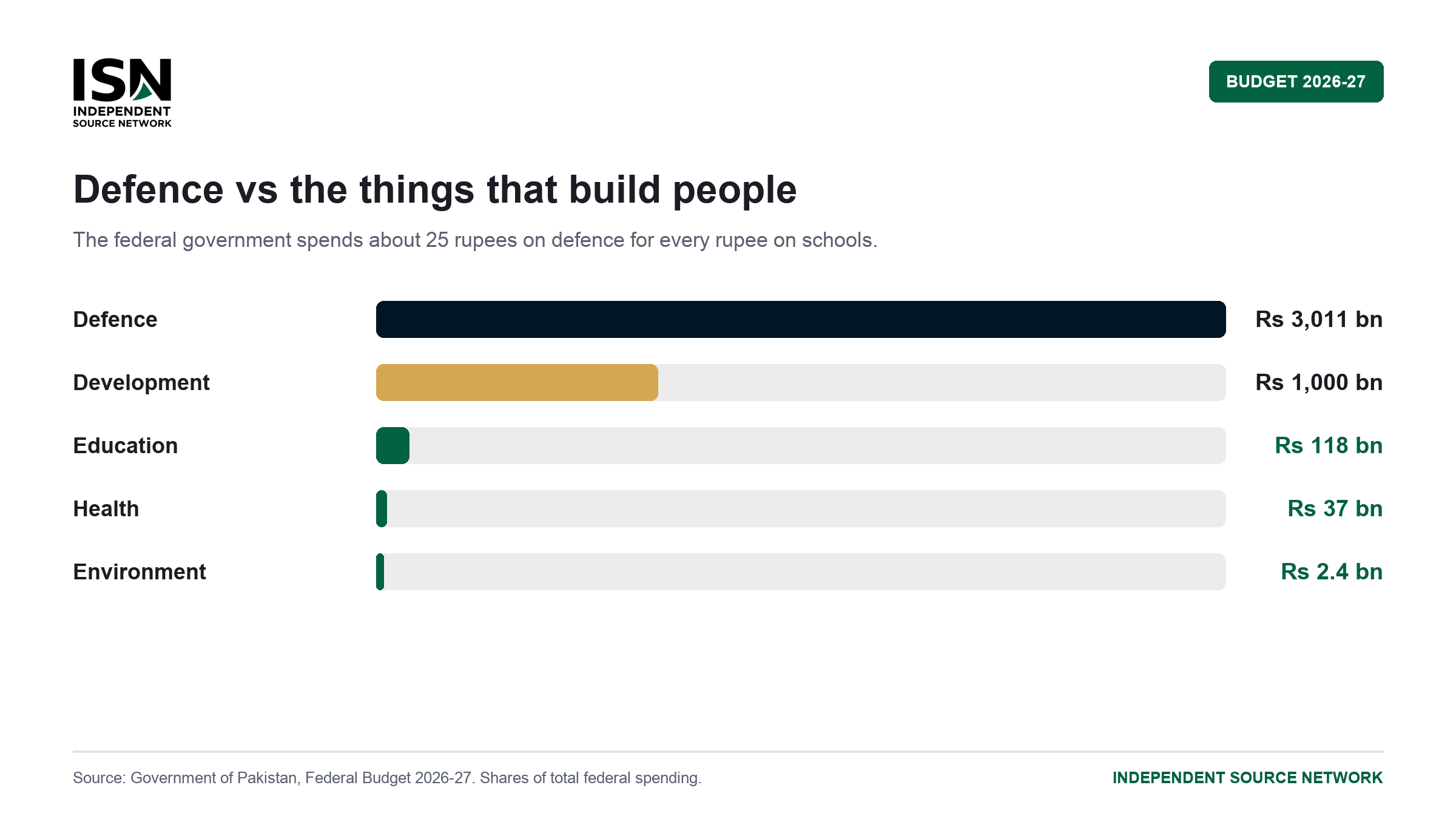
Federal education beside defence and the other social sectors.
The national picture
Allowing for devolution, Pakistan's combined federal and provincial education spending has for years stayed below 2 percent of gross domestic product. That is beneath the level of about 4 percent recommended by bodies such as UNESCO, and beneath several comparable countries. So even the national total, not just the federal figure, is low by international standards, as examined in does Pakistan spend 4 percent of GDP on education.
Did it rise this year?
Parts of the federal education budget rose. The current line rose about 4.5 percent, the Higher Education Commission about 16.5 percent, and federal education and training almost doubled. The increases are real but small in rupees, because the base is low. The federal contribution to education therefore grew faster than inflation, even though the totals remain modest.
Frequently asked questions
How much does Pakistan spend on education in 2026-27? About Rs 118 billion in federal current spending, 0.6 percent of the budget or 63 paisa in every 100 rupees. With development lines, the federal total is around Rs 200 billion. Most school funding is provincial.
Why is the federal figure so small? Because the eighteenth amendment devolved most school education to the provinces, which fund schools from the roughly Rs 8,848 billion the centre transfers. The federal lines mainly fund higher education and federal institutions.
What is the national education spending figure? Combined federal and provincial education spending has for years stayed below 2 percent of GDP, beneath the roughly 4 percent recommended internationally.
Did the education budget rise this year? Parts did. Current education rose about 4.5 percent, the Higher Education Commission about 16.5 percent, and federal education and training almost doubled, though from a low base.
What does the federal education budget fund? Mainly higher education, federal training institutions, and education in directly administered territories, rather than the bulk of the country's schools.
Is Pakistan's education spending adequate? By international standards, no. Even with provincial spending added, the national total stays below 2 percent of GDP, beneath benchmarks and several neighbours.
How does education spending compare with defence? Federal education of about Rs 118 billion is roughly one twenty-fifth of the defence budget of about Rs 3,011 billion, so the federal government spends about 25 rupees on defence for every rupee it spends, at the centre, on schools.
Sources and notes
- Government of Pakistan, Federal Budget 2026-27: education figures are Budget Estimates in billions of rupees, rounded for readability.
- Education spending below 2 percent of GDP and the UNESCO 4 percent benchmark reflect long-standing national accounts and UNESCO guidance.

 ISN MEDIA