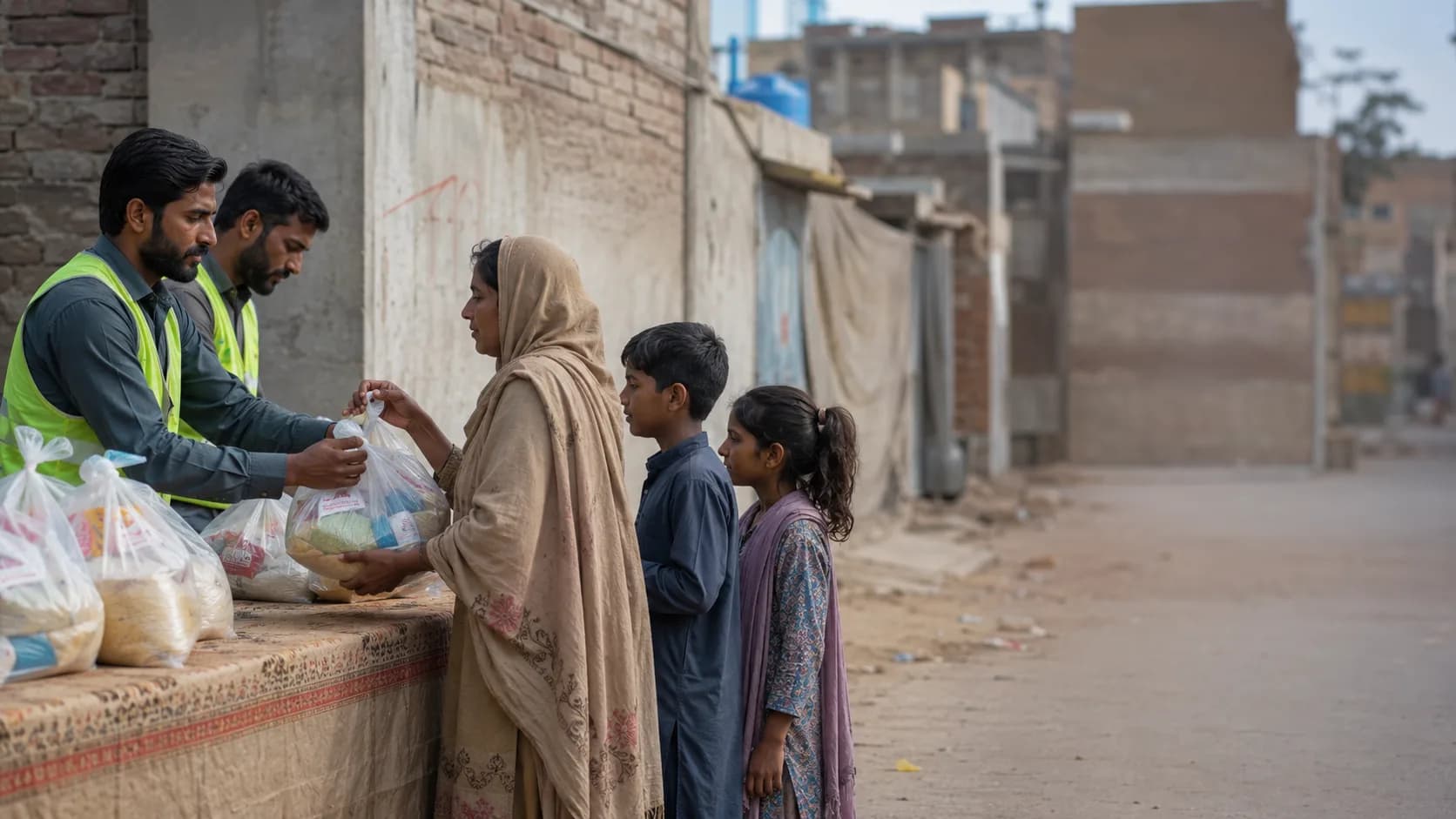
Government-to-government treaties that protect migrant workers , and why Pakistan's are weaker than India's, the Philippines', and Bangladesh's
Bilateral Labour Agreements (BLAs) are treaties between sending and receiving countries that protect migrant workers. India has strong BLAs with every major Gulf state. Pakistan's are weaker, with no enforced wage floors and minimal grievance mechanisms. The gap is one of the structural reasons Pakistani workers earn 15 to 35 percent less than Indians for the same work.
This piece sits inside the Pakistani Workers Gulf Wages cluster, under the broader Pakistan Brain Drain: The Graveyard of Remittancers pillar.
What is a Bilateral Labour Agreement?
A Bilateral Labour Agreement is a government-to-government treaty between a country that sends migrant workers (like Pakistan) and a country that receives them (like Saudi Arabia). A strong BLA covers:
Minimum wage floors , by skill category, enforced by both sides
Standard employment contracts , pre-approved templates, no last-minute substitution
Worker recruitment standards , licensing, fees, accountability for agents
Dispute resolution mechanisms , clear grievance pathways with timelines
Repatriation in case of death or distress , who pays, who organises
Family unification rights , when permitted, with clear visa pathways
Skills certification recognition , qualifications recognised both sides
A weak BLA covers some of these on paper without enforcement, or covers fewer of them altogether.
What India's BLAs include
India has strong BLAs with all major Gulf states. The agreements include:
Wage floors by skill category
Standardised contracts in workers' native languages
Mandatory pre-departure orientation
Recognition of Indian Workers Resource Centres in destination countries
Labour-attaché access rights at embassies
Repatriation protocols in death/distress
Specific protections for women workers
These are backed up operationally by India's IWRCs in Riyadh, Sharjah, and Doha; the Madad grievance portal; the Pravasi Bharatiya Sahayata Kendra; and the Indian Community Welfare Fund.
What Pakistan's BLAs lack
Pakistan has signed bilateral worker-export agreements with Gulf states, but:
No enforced wage floors at scale
Standard contract templates exist but are routinely substituted on arrival
No labour-attaché network at scale
No equivalent of IWRCs in Gulf cities
No equivalent of Madad portal
Repatriation costs frequently fall on families
The Pakistani worker enters the Gulf labour market with a state behind him only on paper. The Indian worker enters with a state behind him on the ground.
The wage gap is not skill. The wage gap is treaty quality.
The Konrad-Adenauer-Stiftung verdict
KAS researchers documented the gap in March 2025: "Policymakers in the Ministry of Overseas Pakistanis and Human Resource Development reported there were no policies in place to inhibit the outflow of highly skilled workers." That is the official position. The state has admitted, on the record, that it is not even trying.
If the state is not trying to retain workers, it is also not negotiating hard for the workers it sends out.
The Philippines model, for comparison
The Philippines, with around half Pakistan's diaspora, has built a far more effective bilateral-treaty regime:
BLAs with all major destination countries
Mandatory OWWA insurance covering death, injury, repatriation
Labour attachés at every major embassy
Standardised employment contracts enforced
24/7 distress hotlines
Bans on migration to abusive countries (used as leverage)
Pakistan has none of these at scale. The Philippines has been doing this for 50 years. India has been doing it for 30 years. Pakistan is behind both, with a much larger talent base to lose.
What the solution looks like
Pakistan can renegotiate. The Gulf states want Pakistani labour , that is leverage. The renegotiation needs:
New BLAs with all Gulf states with enforced wage floors by skill category
Standard pre-approved employment contracts with criminal penalties for substitution on arrival
Pakistani Workers Resource Centres (modelled on India's IWRCs) in Riyadh, Sharjah, Doha, Dubai, Abu Dhabi
Labour attachés at every major embassy with worker-rights mandates
Mandatory worker insurance (OWWA model) covering death, injury, repatriation
A Madad-equivalent grievance portal with public case-tracking KPIs
The full plan is at The Real Brain Gain Plan.
In closing
A treaty is a piece of paper. But the difference between a strong treaty and a weak one is the difference between a worker dying in 50°C heat with no investigation and a worker dying with a state that demands accountability. The difference is policy. And policy is a choice the Pakistani state has refused to make for 78 years.
The dollars belong to us. The country belongs to us. The treaty should reflect that.
, Asad Baig
Frequently asked questions
What is a Bilateral Labour Agreement? A Bilateral Labour Agreement (BLA) is a treaty between a sending country and a receiving country that sets out worker protections, wage floors, recruitment standards, contract templates, and grievance mechanisms for migrant workers.
Why are Pakistan's BLAs weaker than India's? Pakistan's BLAs lack enforced wage floors, lack labour-attaché networks at scale, lack an equivalent of India's Indian Workers Resource Centres in Gulf cities, and lack an equivalent of India's Madad grievance portal. Konrad-Adenauer-Stiftung documented in 2025 that Pakistan has no policies in place to retain or protect skilled workers.
Which countries have the strongest BLAs? The Philippines (mandatory OWWA insurance, labour attachés, standard contracts) and India (Indian Workers Resource Centres, Madad portal, labour attachés, ICWF). Both have built operational infrastructure on the ground in Gulf cities, not just paper agreements.
How much would stronger BLAs improve Pakistani worker wages? Closing the gap with Indian Gulf workers (currently 15 to 35 percent below Indians for the same role) could mean ~$120,000 more per worker over a 25-year career. Across 5 to 6 million Pakistani Gulf workers, the cumulative impact runs into tens of billions of dollars over a generation.
Sources and notes
Konrad-Adenauer-Stiftung Gulf Migration Research Program, Policy Brief No. 15, March 2025
"Protecting and promoting the rights of the 'reserve army of labour'," PMC, 2023
ILO Pakistan , Travel Smart Work Smart guides for Saudi Arabia and UAE, 2015
India Budget 2026-27 Notes on Demands for Grants No. 29
Pakistan Ministry of Foreign Affairs documentation
Atlantic Council South Asia Center , "How South Asian countries can protect their migrant workers abroad," 2022
Related reading
Pillar: Pakistan Brain Drain: The Graveyard of RemittancersParent cluster: Why Pakistani Workers Earn Less Than Indians in the Gulf
Sibling spokes:
Other pillars:
Thank you for reading.
, Asad Baig


 Admin
Admin