



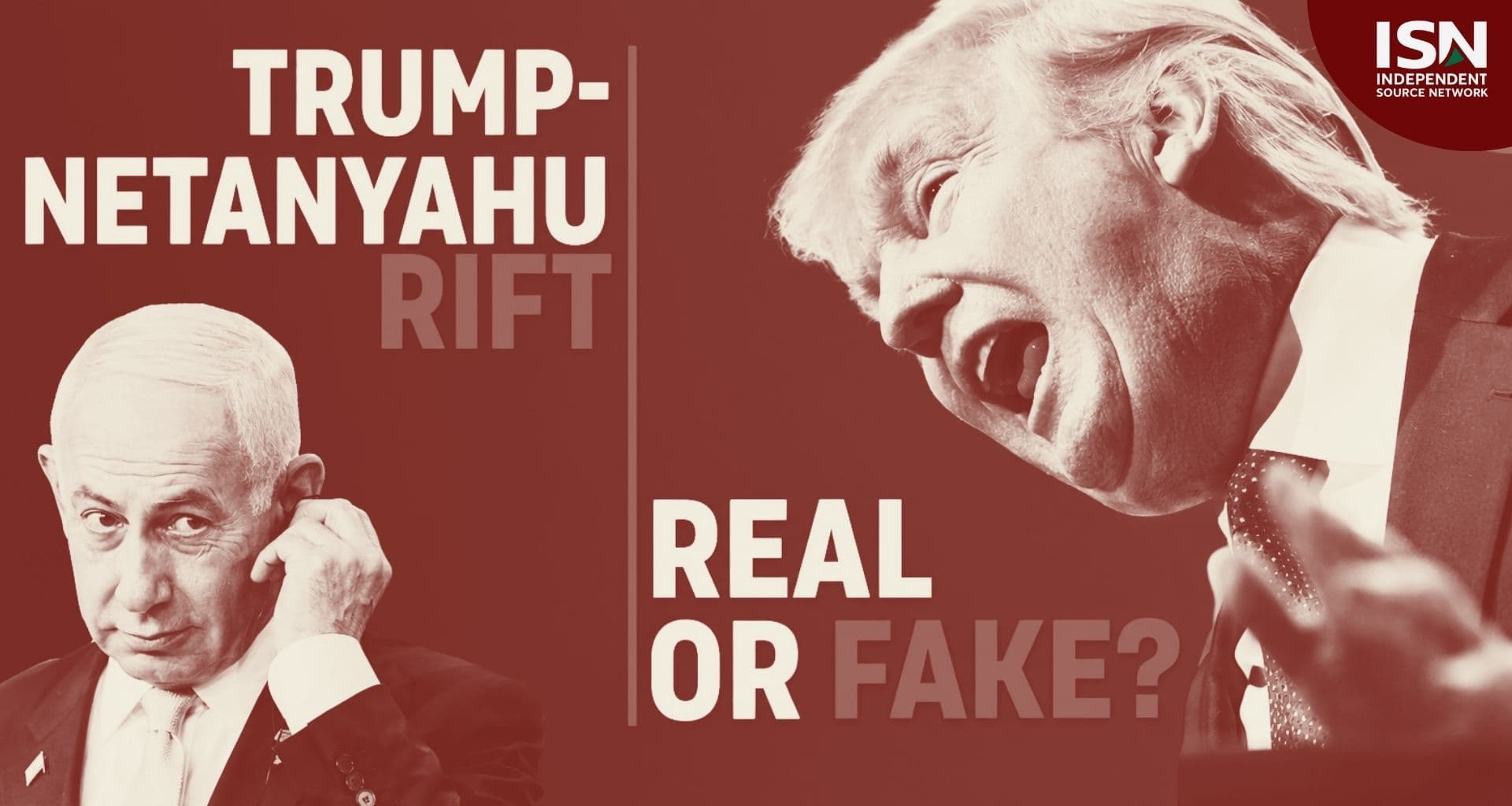
Why Trump and Netanyahu Are Suddenly at War: The 7 Hidden Forces Behind a Historic Rift
The "f**ing crazy" phone call was not the cause. It was the symptom of a tectonic shift in the US-Israel alliance that has been building for over a year — and that nobody is talking about honestly.*
The Moment the Mask Slipped
On June 2, 2026, the world learned that President Donald Trump had called Israeli Prime Minister Benjamin Netanyahu "f***ing crazy" in an expletive-laden phone call. According to Axios reporting, Trump went further: "You'd be in prison if it weren't for me. I'm saving your ass. Everybody hates you now. Everybody hates Israel because of this."
For anyone who has watched US-Israel relations for the past three decades, that sentence is not a diplomatic incident. It is a rupture. It is the kind of thing American presidents say about hostile leaders, not to the prime minister of America's closest Middle East ally — and certainly not from a president whose first term gifted Israel the Jerusalem embassy move, Golan Heights recognition, and the original Abraham Accords.
So what changed? The official narrative is that Israel's escalating campaign against Hezbollah in Lebanon is jeopardizing Trump's US-Iran peace talks. That is true. But it is also surface dressing on a much deeper story — one involving political survival instincts, a misread superpower, a quietly hostile Gulf, and an Iranian wedge strategy that may be working exactly as designed.
Here are the seven forces pulling Trump and Netanyahu apart.
1. Netanyahu Bet Everything on Regime Change in Tehran — and Trump Realized It Could Cost Him Washington
This is the single most under-reported angle in the entire crisis, and it comes from a stunning admission by a US source to CNN:
"Israelis were so invested in regime change in Iran that they did not fully comprehend the war could lead to a regime change in DC."
Let that sentence land. When Israel and the US launched "Operation Epic Fury" against Iran in February 2026, Netanyahu's team appears to have assumed Trump's political capital was bottomless. It was not. By late spring, the polling damage from a prolonged Middle East war was severe enough that Trump's inner circle began describing the situation in stark terms: the narrative that "Bibi is wagging the dog" was killing the president domestically.
Trump himself made the recalibration public last week with one line: "Bibi's a good guy, he'll do what I tell him." That is not the language of an alliance. That is the language of a hierarchy being reasserted.
The deeper truth: Netanyahu didn't just miscalculate Trump's patience. He misread the entire architecture of American politics in 2026. Trump is no longer the insurgent of 2017 who needed Israel to validate his foreign-policy credentials. He is a second-term president obsessed with legacy, midterm survival, and a Nobel Peace Prize narrative. Israel went from being Trump's asset to being his liability — and Netanyahu didn't see the pivot coming.
2. The MAGA Civil War Nobody Wanted to Acknowledge
The Trump-Netanyahu rift cannot be understood without understanding the Trump-Carlson feud that erupted alongside it.
Tucker Carlson, once one of Trump's most influential media allies, broke publicly with the president over US involvement in the Iran war. He was not alone. Marjorie Taylor Greene — a former Netanyahu defender — described the situation in Gaza as "genocide." Vice President JD Vance posted a tweet that conflict-watchers immediately read as a "political signal" of administration distancing from Israel.
This is the MAGA realignment that establishment media has been slow to map. The America First base that Trump rode to a second term is fundamentally non-interventionist. It will tolerate aid to Israel; it will not tolerate American soldiers, missiles, and treasure being committed to what it perceives as Israel's regional wars. Every additional week the Iran conflict continues, Trump bleeds support from the very voters who put him in office.
Out-of-the-box observation: Netanyahu has historically managed US politics by cultivating Republican relationships and assuming Democratic hostility. The 2026 reality has inverted that map. The biggest threats to the US-Israel alliance are no longer progressive Democrats — they are populist, anti-war Republicans inside Trump's own coalition. Netanyahu's playbook is obsolete, and he hasn't updated it.
3. The Iran Deal Is Trump's Nobel — and Netanyahu Is the Obstacle
Trump wants the Iran deal. Not "wouldn't mind one" — wants it. The Iran negotiation has become the centerpiece of Trump's claim to be the president who ends forever wars, reopens the Strait of Hormuz, and stabilizes oil markets before US midterms.
Iran has read this perfectly. According to a former US official cited by The Hill, "one of Iran's main goals is to drive a wedge between the US and Israel. If they can get to a place where they have persuaded the administration that Israel is the problem here…they think that will make Trump put pressure on Bibi to stop."
That is exactly what is happening. When Iran suspended talks citing Israeli ceasefire violations in Lebanon, Trump did not back Israel — he called Netanyahu, used expletives, and forced a de-escalation around Beirut within hours. Hezbollah, through Lebanese channels, immediately confirmed it would halt strikes on Israel in exchange. The message to Jerusalem was unmistakable: the alliance is no longer unconditional.
Every Israeli strike that derails Iran talks now reads, in the Oval Office, as economic and political sabotage of Trump's signature foreign-policy goal. Netanyahu is not just being unhelpful. From Trump's perspective, he is actively damaging American interests.
4. Netanyahu's Coalition Math Has Made Peace Politically Impossible
Here is the trap Netanyahu cannot escape, and it has nothing to do with Trump.
Netanyahu's governing coalition depends on far-right ministers Bezalel Smotrich and Itamar Ben-Gvir. These ministers have made it explicit, repeatedly, that any meaningful concession to Palestinian statehood, any genuine ceasefire architecture that leaves Hamas politically intact, or any pathway toward Saudi normalization that requires Israeli compromise will collapse the government.
When a temporary truce occurred in January 2025, Netanyahu broke it within two months specifically to bring Ben-Gvir back into the coalition and pass the budget. This is documented. The Atlantic reported that senior Trump administration officials now openly believe Netanyahu has "extended the war in Gaza to further his political career" and "repeatedly interfered with ceasefire talks."
The brutal calculus: Netanyahu can either lose his coalition (and likely face renewed prosecution in his corruption trials, which Trump pointedly referenced with the "you'd be in prison" remark) or he can lose Trump. He has chosen, repeatedly, to keep the coalition.
This is why Trump's "you'd be in prison if it weren't for me" line is so devastating. It is not just an insult. It is Trump reminding Netanyahu that his political and legal survival depends on American protection — and that protection is contingent.
5. The Gulf Has Quietly Flipped — and Israel Hasn't Noticed
The Abraham Accords were possible in 2020 because the Gulf monarchies viewed Iran as the existential threat and Palestinian statehood as a marginal concern. Six years later, that equation has inverted in ways Israeli intelligence appears to have underweighted.
Saudi Arabia has now publicly conditioned any normalization with Israel on firm guarantees of Palestinian self-determination. Pakistan has rejected Trump's Abraham Accords expansion demand outright. Qatar — where Israel attempted a failed assassination strike on Hamas leadership, killing a Qatari security officer — is furious. The UAE remains formally normalized but visibly cooler.
More importantly: when Iran retaliated in early 2026, missiles and drones landed in Kuwait, Bahrain, and triggered sirens in Saudi Arabia. The implicit US security umbrella did not protect Gulf capitals. That single fact has done lasting damage to the assumption that "the US protects us, Israel is on our side, Iran is the enemy" — the foundational logic of the original Abraham Accords.
The deeper shift: Trump now needs Gulf cooperation more than he needs Israeli cooperation. The Gulf controls oil markets, Strait of Hormuz traffic, and the postwar reconstruction money that will determine whether Trump's Iran deal looks like victory or catastrophe. Israel controls none of those levers. The hierarchy of American Middle East priorities is being silently rewritten — and Netanyahu is no longer at the top.
6. The "Personal Friendship" Was Always Transactional — and Trump Just Cashed Out
The intimate political marriage between Trump and Netanyahu — embassy moves, Golan recognition, the Soleimani strike, the original Abraham Accords — was always rooted in mutual transaction, not genuine ideological alignment. Trump delivered for Netanyahu because Israel delivered domestic political wins for Trump (evangelical voters, Jewish donors, foreign-policy "wins"). Netanyahu delivered for Trump because Trump delivered everything Israel had wanted from a US president for thirty years.
In 2026, the transaction has stopped paying out for Trump. Israeli ground offensives in Lebanon do not deliver him a single voter. The Doha strike that killed a Qatari and missed every Hamas leader did not deliver him a single voter. The strike on Iran's South Pars gas fields — which triggered Iranian retaliation and rocketed gas prices — actively cost him voters.
Trump has reportedly told confidants that the Israeli strikes are increasingly disconnected from any coherent strategy he can sell domestically. And here is the cold psychological reality: Trump does not maintain alliances out of sentiment. He maintains them out of utility. The moment the utility flips negative, the relationship is renegotiated — publicly, brutally, in real time.
7. The Generational Realignment That Both Leaders Are Pretending Not to See
Beneath every immediate fight — Lebanon, Iran, Gaza, the Abraham Accords — sits a generational shift in American attitudes toward Israel that neither Trump nor Netanyahu can stop.
Polling across 2024–2026 has consistently shown American support for Israel declining sharply among voters under 40, including among young Republicans and young evangelicals. The October 7 attacks generated brief sympathy that was substantially eroded by sustained images of Gaza's destruction, the church strike, the Doha operation, and the Lebanon escalation. Trump's own pollsters reportedly track this trendline with alarm.
This is not the moralistic story of "the world is turning against Israel." It is the mechanical story of American electoral arithmetic. A Republican president cannot indefinitely defend a foreign government whose actions alienate the median voter under 40, including a meaningful slice of the MAGA coalition. The political ground is shifting beneath Netanyahu's feet, and Trump — a politician of remarkable survival instinct — has felt the tremor.
Why This Rift Is Genuinely Unprecedented
Previous US-Israel disagreements — Eisenhower over Suez, Reagan over Lebanon, Bush 41 over settlements, Obama over Iran — were ideological or strategic. They were debates between allies who agreed on the alliance itself.
The Trump-Netanyahu rift is structurally different for three reasons:
It is personal and public. No US president has ever called an Israeli prime minister "f***ing crazy" on the record. The breaking of that taboo signals to every other world leader that Israel's American protection is now conditional and visibly so.
It involves explicit American leverage over Israeli domestic politics. Trump's "you'd be in prison" line was not metaphor. He was reminding Netanyahu that American diplomatic cover affects the Israeli prime minister's legal jeopardy. That is an extraordinary thing to say out loud.
It is happening with a Republican president. Every prior major US-Israel rift involved Democratic or moderate Republican administrations. Netanyahu's entire political strategy for two decades has been to bet on Republican Washington against Democratic Washington. That bet has failed for the first time in his career.
What Happens Next: Three Scenarios
Scenario A — Reconciliation with conditions. Trump forces Netanyahu into a Lebanon ceasefire and a sustained Gaza pause. Iran deal closes. Netanyahu spins the outcome as "Trump-led peace through Israeli strength." Coalition wobbles but survives until 2026 Knesset elections. Most likely in the short term.
Scenario B — Open break. Netanyahu's coalition partners force one provocation too many. Trump publicly distances. Saudi normalization proceeds without Israeli participation. Netanyahu loses elections in 2027. New Israeli government repairs relations. This is what the Atlantic Council and the Soufan Center have begun forecasting.
Scenario C — The wildcard. Iran overplays its hand — fresh strikes, a nuclear breakout signal, a missile that kills Americans — and Trump is forced to re-embrace Israel for strategic necessity. Netanyahu survives by being lucky rather than skillful.
The smart money is currently on Scenario A in the short term, drifting toward Scenario B by mid-2027.
The Bottom Line
The Trump-Netanyahu conflict is not really about Lebanon. It is not really about Iran talks. It is not really about Gaza ceasefire mechanics. Those are the symptoms.
The disease is a structural mismatch between an American president who needs an off-ramp from Middle East war and an Israeli prime minister whose political survival depends on perpetual conflict. It is a Gulf region that has quietly stopped treating Israel as an essential partner. It is a MAGA base that is no longer reliably pro-Israel. It is an Iranian leadership executing a textbook wedge strategy. And it is a generational shift in American politics that no amount of diplomatic theater can reverse.
What we are witnessing is not a personality clash between two strong-willed men. It is the end of an era. The unconditional US-Israel alliance — forged in the Cold War, reaffirmed after 9/11, weaponized politically under Trump 1.0 — is being conditional-ized in real time, by a Republican president, on live television.
That is why this feels different. Because it is.
Frequently Asked Questions
Why did Trump call Netanyahu "f*ing crazy"?** Trump used the expletive during a heated phone call on June 1–2, 2026, over Israel's planned military strikes against Hezbollah in Beirut. The strikes risked collapsing the US-Iran peace negotiations, which are Trump's signature foreign-policy initiative.
Is the US-Israel alliance over? No. But it has shifted from unconditional to conditional. Trump still describes himself as Netanyahu's friend, but he has now publicly demonstrated he will override Israeli military decisions when they conflict with US interests.
What does Iran want from the US-Israel split? Iranian strategy explicitly aims to drive a wedge between Washington and Jerusalem, persuading the Trump administration that Israeli actions — not Iranian ones — are the obstacle to peace. The evidence suggests this strategy is working.
Why won't Netanyahu just accept a ceasefire? His governing coalition depends on far-right ministers who have vowed to bring down the government if Israel makes concessions toward Palestinian statehood or accepts a ceasefire that leaves Hamas politically intact. A coalition collapse could expose Netanyahu to accelerated corruption prosecutions.
Could Trump actually abandon Israel? Full abandonment is implausible. But Trump has demonstrated he is willing to publicly humiliate Netanyahu, override Israeli military operations, and pursue Gulf relationships that require Israeli compromise. The protection is now leveraged, not automatic.
How does this affect the Abraham Accords? Significantly. Saudi Arabia, Pakistan, and other key targets have made expansion contingent on credible Palestinian statehood progress. Netanyahu's coalition cannot deliver that. This effectively freezes Trump's signature regional initiative until either Netanyahu changes coalition partners or Israel changes governments.
Is this rift permanent? The personal damage between Trump and Netanyahu is severe but probably recoverable. The structural shifts — generational US opinion, Gulf realignment, MAGA non-interventionism — are not. Even if Trump and Netanyahu publicly reconcile, the underlying alliance has been permanently altered.
This analysis synthesizes reporting from CNN, Axios, The Atlantic, Foreign Policy, Reuters, Al Jazeera, the Atlantic Council, and the Soufan Center, alongside on-the-record statements from administration officials and regional diplomats as of June 2026.


 Yasir Rai