February 2024 — JAAC calls its first coordinated shutter-down strike on Kashmir Solidarity Day, February 5, escalating a campaign that had built quietly through 2023 in Poonch, Mirpur and Muzaffarabad. Traders' associations, transporters and lawyers observe strikes across all major towns.
8–14 May 2024 — First major nationwide protest wave. What began as demonstrations against electricity and wheat prices spirals over six days into a wheel-jam strike that paralyses Mirpur, Muzaffarabad and Rawalakot. At least three protesters and one police officer are killed. Under the direct intervention of Prime Minister Shehbaz Sharif and President Asif Ali Zardari, the federal government agrees to a Rs 23 billion (about USD 82 million) grant to AJK, subsidises wheat and electricity, and announces a judicial commission to review elite privileges. JAAC accepts the concessions but declares its structural demands "deferred, not withdrawn."
October 2024 — After further negotiations, an intermediate charter of demands is signed between the AJK government and JAAC. It resolves most immediate economic issues but leaves the political demands — refugee seats, elite privileges, quota system — untouched.
29 September – 4 October 2025 — Second major wave. JAAC issues its finalised 38-point Charter of Demands and calls a region-wide shutter-down and wheel-jam strike. The government imposes a communications blackout. Clashes are reported across Poonch and Mirpur. On 4 October, the AJK government and JAAC sign a 12-point core agreement with 13 supplementary undertakings. At least nine people, including three policemen, are killed during the unrest. A high-level committee is constituted to examine the refugee seats question — the first formal government acknowledgment that the issue is on the table.
April 2026 — India introduces the Delimitation of Constituencies Bill 2026, proposing 24 Indian parliamentary seats reserved for AJK, to be kept vacant until "Indian control is established." The move injects new heat into the AJK domestic debate over the meaning of the refugee seats.
Early June 2026 — Tension escalates. On 5 June, the AJK government declares JAAC a proscribed organisation under the Anti-Terrorism Act. On 6 June, a trader affiliated with JAAC is shot during a confrontation with law enforcers. On 7 June, the AJK Supreme Court issues its advisory opinion holding the 12 refugee seats constitutionally protected. That same day, protesters gather outside the Combined Military Hospital in Rawalakot where the trader's body is being held.
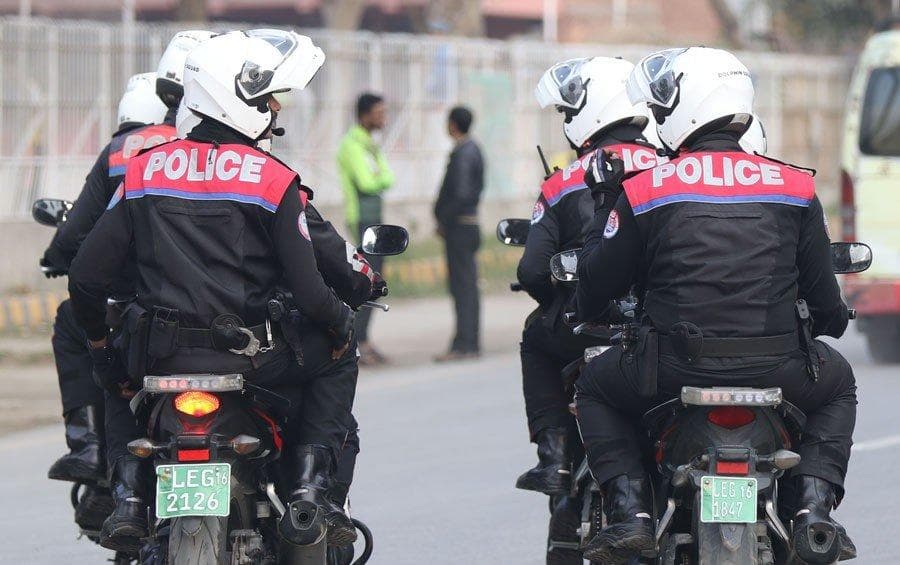
7–8 June 2026 — Rawalakot violence. Clashes at CMH Rawalakot escalate into open confrontation. Police say armed elements within the crowd opened fire, killing four officers; JAAC says security forces fired first on peaceful demonstrators. By 8 June, official figures place the death toll at 11 — seven civilians and four police personnel — with 23 policemen and around 50 protesters injured. Some independent reports place casualties higher, with additional deaths reported from Kotli. Section 144 is imposed; a curfew is enforced; movement is restricted to no more than two people at a time entering Rawalakot city.
9 June 2026 — Region-wide strike and long march. JAAC's planned 300-km march from Bhimber to Muzaffarabad is blocked. More than 200 activists are detained across AJK. Federal paramilitary units — Punjab Rangers, Frontier Constabulary — are deployed alongside AJK police. Divisional commissioners are ordered to raid the homes of activists wanted under any FIR.
30 June 2026 — JAAC chairman Shaukat Nawaz Mir is arrested from Dhirkot in Bagh district. The government had placed a Rs 10 million head-money on him. Muzaffarabad DC Munir Qureshi confirms the detention.
Early July 2026 — Fresh clashes in Dadyal (Mirpur district) leave two more protesters dead by JAAC's count; the AJK Inspector-General disputes the figure. The government issues election notifications, splitting polling into three phases.
16 July 2026 — JAAC holds a large sit-in at Eidgah Ground on the outskirts of Rawalakot. It announces the postponement of its long march to Muzaffarabad, citing "dialogue underway with authorities."
27 July 2026 — Phase One of AJK legislative elections is held under army-backed security cover in the majority of constituencies. Muzaffarabad and Poonch divisions are scheduled for 2 August and 10 August respectively. Campaigning has been "relatively more subdued" than previous elections. Two of AJK's most popular political groupings — JAAC and the PTI-aligned platform whose leaders remain in detention nationally — are effectively absent from the ballot.
The 2024–2026 arc shows a pattern: economic concession, deferred structural reform, renewed protest, harder crackdown, harder protest. The next data point on this curve will be the composition of the assembly that emerges from the August 2026 elections — and whether it has the political room to address what four years of protest have raised.

 Yasir Rai